
Veterinary social work in Illinois.
Therapy for the people who care for animals for a living, and for people grieving an animal of their own. In person in Peoria, or by video anywhere in the state.
You spend the day managing everyone else’s worst moment.
You hold a family together through a euthanasia at four o’clock and start the next appointment at four fifteen. You absorb anger about prices you don’t set. You carry the cases where the right medicine existed and the money didn’t. You went into this because of the animals, and some days the animals are the easiest part of it.
The profession has been saying this for a while. Feeling this way doesn't mean you're weak — and it isn’t a personal failure of resilience; it’s a predictable response to the work.
The same weight lands on animal welfare work. Whether you're shelter and rescue staff, animal control officers, or foster coordinators, at some point everyone will be faced with the intake that never stops, the capacity decisions, the animals that couldn’t be place. This is the reason that veterinary social work exists, and the reason it matters that the person across from you already understands what so many others don't. You shouldn't have to convince someone of the weight your job carries.
Working with your schedule
The biggest barrier for any working professional seeking treatment is availability. To help with that, I offer early morning and evening appointment hours.
Not only veterinarians
Veterinary and animal welfare work encompasses many jobs: technicians, client service staff, students, and shelter and animal control staff. Everyone in this field absorbs the same weight, and the people offered the least help with it are usually the ones holding the animal.
What we might work on
- Compassion fatigue and burnout that days off don’t touch
- Moral distress — economic euthanasia, owner noncompliance, cases you couldn’t take
- The aftermath of an undesirable outcome
- Anxiety, depression, and substance use, including the kind you’ve been trying to manage quietly
- Perfectionism and imposter syndrome
- Boundaries with clients, with your practice, and with your phone
- Grief that stacks up faster than you can process it
- Whether to stay in clinical practice — and how to make that decision when it's not a crisis
If you’re responsible for a team
Most practices and shelters handle staff wellbeing reactively: someone reaches a breaking point, and everyone scrambles. There’s a better version, and it’s cheaper than turnover. I work with organizations directly as well as with individuals.
For a practice or organization
- Debriefs after a difficult case, a euthanasia that went badly, or a client incident
- Staff education on compassion fatigue and sustainable boundaries
- Training on euthanasia conversations and supporting grieving clients
- Support after a large intake, a hoarding case, or a capacity decision
- Help building client bereavement support into your practice
- A standing referral relationship — a named clinician for your team and your clients
It was real loss. Most of the world will not treat it that way.
Clinicians call this disenfranchised grief: loss that’s genuine but socially unrecognized. Many employers don't offer bereavement leave for animals. People say “you can always get another one” and mean it kindly. So the grief goes underground and runs on a schedule nobody agreed to, usually next to a guilt that has nowhere to put itself.
Often the animal was the one who got you through something — a divorce, a deployment, early sobriety, a year you don’t talk about. Losing them reopens that wound, which is why this grief can be so much larger than people expect and so much harder to explain to anyone.
You don’t have to justify any of it in this room, and there’s no timeline you’re supposed to be finished by.
This can include:
- Anticipatory grief while you’re deciding, and the decision itself
- Guilt about timing — too soon, too long, or otherwise
- Sudden or traumatic loss, including accidents and attacks
- Losing a service, working, or support animal, which is also a loss of independence
- A death that has reopened the feelings of earlier one
- Deciding whether and when to bring another animal home
Why I Can Help
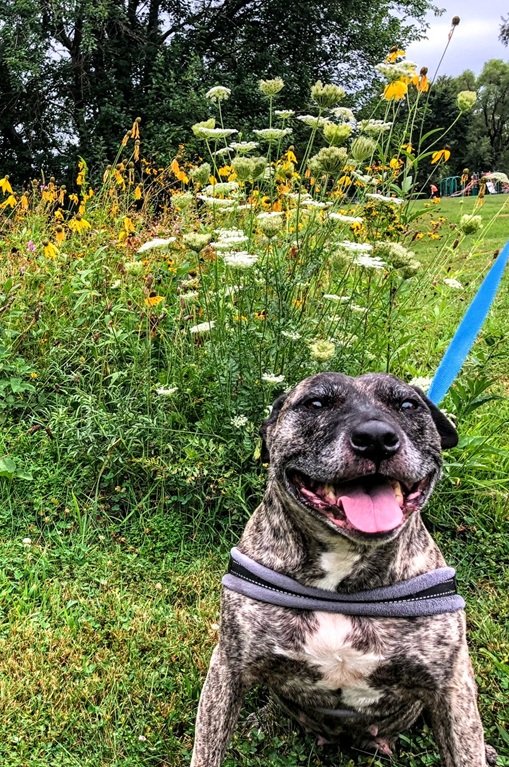
When you make the decision to seek out a therapist, fit matters. Of all the great therapists out there, then, why choose to work with me? The first answer is one that I share with many colleagues, but is no less important: I have dedicated my entire academic career and professional experience to therapeutic services. After receiving my Master’s of Social Work in 2012 (later adding my LCSW licensure), I began work as a substance use counselor — and much of the following decade was spent working in treatment centers and in drug court programs, providing services for individuals with substance use disorders and various mental health diagnoses. Following that deeply rewarding work, I entered into private practice in 2022 and decided to return (briefly) to the graduate school ranks in 2025, where I earned a Post Master’s Certificate in Veterinary Social Work from NYU.
In the very specific world of pet grief and animal welfare work burnout, however, more important than the schooling I have received and environments I have worked in is my personal experience of pet loss and my passion for animal welfare as a whole. I adopted my first dog, Deandra, right after completing graduate school and moving to a new city. She was with me for some of the most formative years of my life and was absolutely my heart dog. We lost her unexpectedly in 2019, and it was unlike any grief — any emotion — I have ever experienced.
When I entered private practice in 2022, I made the conscious decision to carve time out of my schedule in order to volunteer — at both a local animal shelter and with a foster-based organization, taking dogs out on “dog dates” for exposure. A couple of years later, I also began volunteering at my local animal control, where I was able to learn and understand so much more about open intake shelters, the absolute overwhelm that the employees endure on a daily basis, and the ways this kind of work can leave marks on us.
These experiences, both felt and observed, have fostered in me an immense well of empathy and compassion for those experiencing the loss of their own beloved animal, as well as those experiencing the unique stresses of working in the animal welfare world. My hope now is to help others navigate these difficult, oft-overlooked experiences.
Reaching out is the hardest part of this.
You don’t have to start with me.
Both of these are free, and neither requires you to be in treatment. Sometimes an easier first door is the right one.
Association for Pet Loss and Bereavement
A nonprofit offering free pet loss support since 1999 — a chat room staffed by trained hosts, video support groups, and plain-language reading on anticipatory grief, euthanasia decisions, children and pet loss, and losing a service animal. aplb.org
988 Suicide & Crisis Lifeline
Free and available every hour of every day, by call or text, for anyone in the U.S. who is struggling. Call or text 988